How to organize homeschool records without keeping every worksheet
Homeschool records become easier to find with one home, one naming rule, and a short review rhythm for paper or digital files.
By Homa
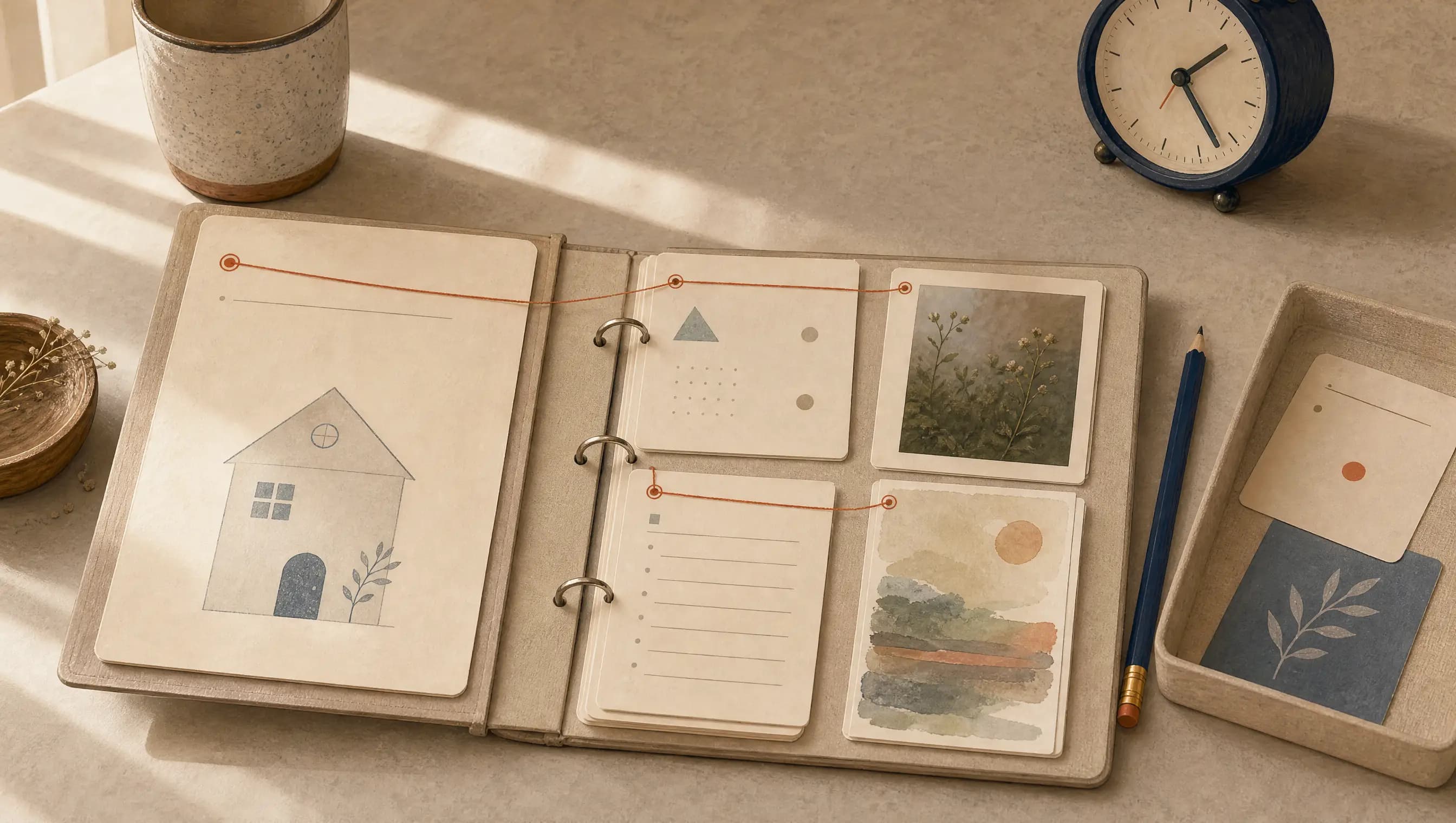
The math page is on the counter. The volcano is in the camera roll. The reading list is in a phone note, unless that was last year’s note. You know the learning happened. Finding the record now requires archaeology.
The answer is not a more complicated filing system. It is fewer places to look.
Organized homeschool records need one main home, one predictable name for every item, and one small inbox for unfinished filing. The permanent record can hold what your family needs and a few examples that show what changed. Paper or digital can both work when each saved item has a clear destination.
One home for the finished record
Your main home can be:
- a binder for each child or school year
- one file box with labeled sections
- a digital folder
- a homeschool record-keeping app
The choice matters less than the rule: when an item is finished, there is one place where the saved version belongs.
You may still capture things elsewhere. A phone takes the photo. A kitchen basket catches the paper. A voice note remembers the museum trip. Those are inboxes, not permanent homes.
If you keep both paper and digital records, one of them can be the final home. For example, the digital folder may hold the complete record while the paper binder holds selected originals. That rule can live inside the front cover so February-you does not have to debate it again.
A folder structure you can remember
Complicated folders feel organized until you have to decide whether a cardboard bridge belongs under science, engineering, projects, or Tuesday.
A shallow structure might look like this:
2026 school year
  Child or family
    Reading
    Math
    Science and projects
    Writing and art
    Plans and reports
If your family thinks in months rather than subjects, months can become the folders. If shared projects matter more than separate child folders, a family-projects section may fit better. The structure should match how you will look for the item later.
A category with only one possible file may not need its own folder. A broad, understandable home beats a perfect filing system you will not maintain.
One kind of name for every saved item
A file called IMG_4837 is a memory test. A file called final-final-new is an argument with your former self.
A useful name has a few predictable parts:
YYYY-MM-DD - child or family - subject - short description
Examples:
[date] - family - science - seed observation
[date] - child - reading - frog story retell
[date] - child - math - equal groups with buttons
For paper, the date and short description can go in the same corner each time. Future-you then has one place to look.
The names your family already understands are enough. The record should not require a legend full of codes.
One small inbox
Not every item can be filed while the lesson is happening. Unfinished records can share one temporary landing place:
- one basket for paper
- one phone album for record photos
- one digital
To filefolder - one running note for activities that need context
A short weekly review can empty it:
- add the date or missing sentence
- save the item in its permanent home
- remove duplicates
- remove anything that does not serve the record
The inbox works because it is temporary. Several inboxes create several places to check.
What earns a place
Three questions can help:
Does a current requirement or program ask for it?
The current official source for your location or the instructions from the receiving program decide what belongs. The source URL and date of your check can stay with the record.
Will it help us understand the work later?
A dated sample, short context note, or photo of a project may answer this better than a stack of repeated practice.
Does it show something the record does not already show?
Another worksheet on the same idea may add less than an earlier example beside a recent one.
If the answer to all three is no, the item may have completed its job at the kitchen table.
The homeschool portfolio checklist applies the same purpose-first test to a smaller selection of work.
Context beside the work
The file alone may not tell future-you why it mattered. One sentence can:
- “Wrote the whole letter without a model.”
- “Built after our library book about arches.”
- “Needed counters at first, then finished without them.”
- “Family read-aloud during the drive to co-op.”
The sentence is not a report card. It explains why the item mattered later.
Context can stay beside the item instead of in a separate journal you must match by date. One record should not require two searches.
How Homa gives records one home
Homa’s homeschool record-keeping feature stores worksheets, photos, and reports together in a digital binder. Saved pages remain available to browse or print again.
The items you choose stay together in the binder. It does not decide which records a state, co-op, school, or evaluator requires. The current source keeps that decision.
A record that is easier to find
Good organization is knowing where the seed photo goes before it disappears into the camera roll.
One permanent home, one kind of name, and one small inbox give each item a destination. The rest of the record can stay focused on a real reader or something worth finding later.