A homeschool portfolio checklist that does not keep everything
A homeschool portfolio built around its reader can hold a small, useful set of work samples, records, photos, and context.
By Homa
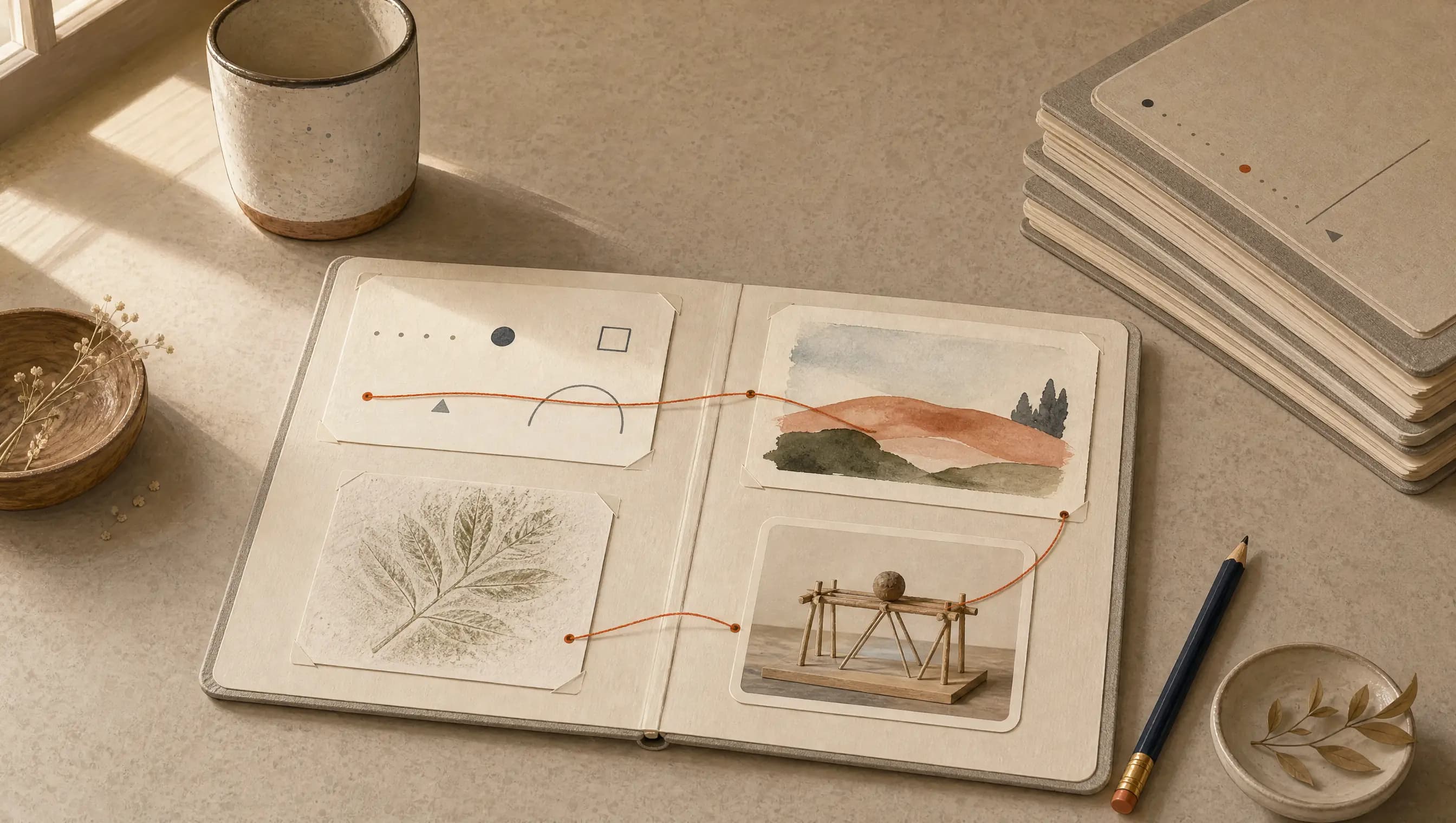
The papers begin in a tidy folder. Then a watercolor refuses to fit, a salt-dough map sheds crumbs, and the camera roll becomes the permanent home of the science project. By spring, “the portfolio” may be scattered across binders, boxes, and a phone album called March-ish.
A homeschool portfolio does not have to contain the whole year. A useful one makes selected work understandable to the person who will read it.
A homeschool portfolio begins with its purpose and reader. When another person or program will review it, their current requirements shape the contents. A small set of dated work samples, photos of work that cannot be filed, brief context notes, and needed records can tell the story without saving every page.
The portfolio’s reader comes first
Portfolios can hold the same child’s work and still need different contents.
A family portfolio
This one helps you remember the year, notice change, and plan what comes next. It can include the work that surprised you, the project everyone still talks about, and a few examples that show a skill becoming more comfortable.
A portfolio for a co-op, school, evaluator, or program
This portfolio is for a specific person or program. Their current instructions can show what belongs before the portfolio grows. They may want particular subjects, dates, signatures, work samples, or summaries.
A portfolio connected to a state requirement
The current official source for your location decides what your family must submit or retain. The URL and the date of your check can stay with the portfolio. A general checklist only helps with organization.
Once the reader is clear, much of the possible clutter stops being relevant.
The purpose-first homeschool portfolio checklist
The sections that serve your portfolio belong. The rest can wait.
Identity and time period
- child’s name as you want it shown
- school year or date range
- grade or age only when the reader needs it
- a short description of the homeschool approach, if useful
Plan or learning context
- subjects or areas covered
- book or resource list
- weekly plan, course outline, or project description
- the current official instructions, when the portfolio serves a requirement
Selected work samples
- dated writing
- math work that shows the process
- reading notes or a book list
- science observations
- art, music, making, or project work
- work from a co-op, class, field trip, or community activity when it fits the portfolio’s purpose
Records and summaries
- hours or attendance only when useful or required
- a short progress summary
- a list of completed projects or books
- any form that person or program asks for
Context for the samples
- what the child was working on
- what support was available
- what changed across the selected examples
- why this sample belongs in the portfolio
The context can be one sentence. “Built after reading about bridge shapes; the second version held more weight after the base changed” tells the reader what a photograph alone cannot.
A small series instead of a paper avalanche
For a skill that matters to the portfolio, a useful series can include:
- an early example
- an example from the middle
- a recent example
The series gives the reader a path. A stack of nearly identical pages asks the reader to find that path alone.
This is a selection method, not a legal standard. Instructions that name a different amount or type of evidence take priority.
For personal portfolios, you can also choose one example that captures the year even if it does not form a series: the hand-drawn map from the long road trip, the recipe covered in fraction notes, or the page that finally made everyone laugh.
Photos for work that cannot live in a binder
A portfolio can hold evidence of a project without holding the project itself.
For a large, temporary, or crumb-producing creation, a useful photo record can include:
- one full view
- one close detail when it explains the work
- the date
- a sentence about what the child made or changed
The photo session does not need to become a second assignment. The portfolio needs enough context to recognize the work later, not a styled product shoot.
A recording can help with music, reading aloud, a presentation, or another time-based project if the portfolio’s reader can receive that format. Private family media can stay private, with only the material the portfolio needs shared.
What you can usually leave out
Unless the portfolio’s instructions say otherwise, items that add volume without adding understanding may not need a place:
- every practice page from the same skill
- duplicate printouts
- blank workbook pages
- photos with no date or context
- every planning draft
- decorations that make the binder larger but not clearer
You are not erasing the day by selecting one useful sample. You are making the record readable.
If deciding what to save is the harder problem, this guide to organizing homeschool records without keeping every worksheet gives the whole year one home and one review rhythm.
A short portfolio review
Once a month or at the end of a unit, these questions can guide a quick review:
- Is the date visible?
- Would I understand this sample six months from now?
- Does it serve the portfolio’s reader?
- Do I already have another sample that says the same thing?
- Is a current requirement asking for something I have not saved?
Each item can then stay, get a clearer label, or leave the portfolio. The review gives it a decision before the end-of-year pile arrives.
How Homa’s digital binder fits
Homa’s homeschool record-keeping feature stores worksheets, photos, and reports together in a digital binder. You can browse the record and print a saved page again.
Homa can give the selected work one place to live. It does not decide what your state, co-op, evaluator, or future school requires. That decision remains with the current source and the reader who will receive the portfolio.
Enough to tell the truth
A useful portfolio is not the heaviest binder on the shelf. It is a deliberate record that lets its reader understand the work without digging through the whole year.
When the reader is clear, the portfolio can stay small without losing its story. Dated samples, a line of context, and photos of work that cannot be filed give the year somewhere to land. Leaving out a worksheet does not erase the day it came from.