How to know if homeschooling is working
See whether homeschooling is working with one useful example, a check across several lessons, and one next step, without grading every day.
By Homa
Some homeschool days end with a finished page and a child explaining something new at dinner. Other days end with newly sharpened pencils, an unfinished paragraph, and the strong suspicion that nobody learned anything.
One hard Tuesday cannot answer whether homeschooling is working. A pattern can.
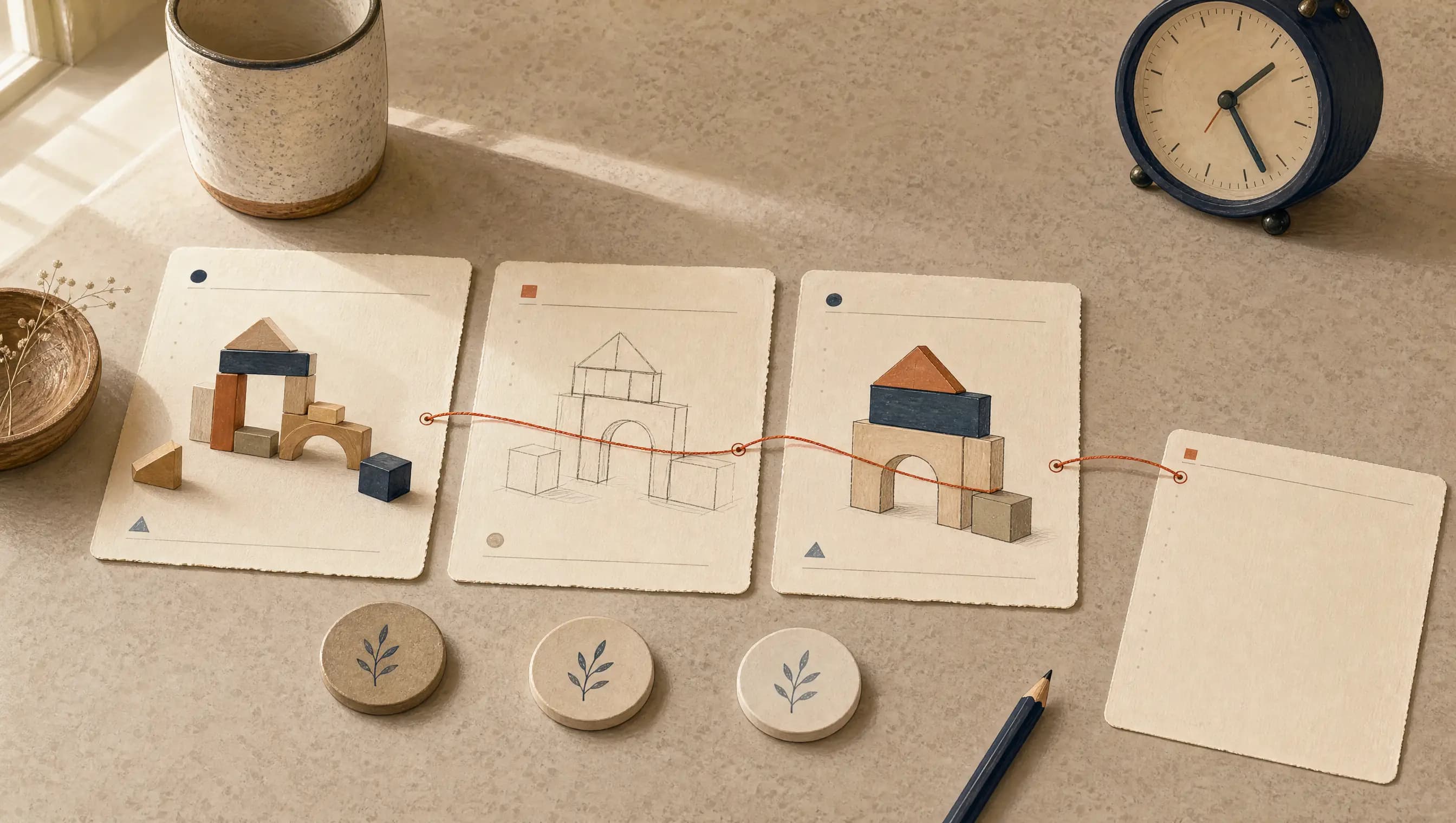
One specific area across several ordinary moments can show whether something is changing. A dated example records what your child could do and the kind of help they needed. Another look after more practice may show more consistency, more independence, or a clearer explanation. That is enough for one next step without grading the whole homeschool.
Make “working” small enough to observe
The question “Is homeschooling working?” can quietly ask several questions at once:
- Is my child learning this skill?
- Does this material fit?
- Can our family keep this rhythm?
- Are we keeping the records we need?
- Do I still believe this choice fits us?
No single page or app can answer all of them. The question actually keeping you awake is the one worth separating first.
If the worry is reading, one reading behavior gives you something specific to notice. If the worry is the family rhythm, the useful question is whether the plan survives the week. If the worry is a local requirement, the current official source names the records that apply.
A smaller question gives you something you can see.
One example before memory rewrites the week
You do not need to document every day. One example that future-you can understand may be enough:
- a dated writing page
- a photo of a finished project
- a note about a book read aloud
- the math problem that needed blocks today
- a sentence your child explained in their own words
The support belongs with it. “Completed the page” says less than “completed part of the page with blocks, then finished the remaining problems without them.”
The support is not a footnote. It is part of the evidence. It tells you what made the work possible and gives you a fair comparison later.
Look for four kinds of change
Progress can appear in several ways:
- More consistency: the same kind of work becomes more accurate.
- Less help: the child needs a shorter reminder, fewer examples, or less physical help.
- A new setting: the idea appears in a different book, game, conversation, recipe, or project.
- A clearer explanation: the child can show or tell how they reached an answer.
One moment can be luck, mood, or familiarity. Several moments begin to form a pattern.
The pattern belongs to this child’s own earlier work. It is not a race with another child, a school, or a chart on the internet.
A simple check across several lessons
This can follow one skill or habit:
1. The smallest useful thing
“Reading” is too broad. “Reads a short-vowel sentence and keeps the sounds in order” is observable.
2. A starting example
The page, photo, or note can include the date and the help you gave.
3. Normal teaching continues
Your usual books, conversation, practice, or activities can continue. The goal is not to turn every lesson into a demand for proof.
4. Another look
A similar task after enough ordinary practice gives you another useful look. What the child did and which support still helped are both part of it.
5. One next step
The next step may be to continue, make the task a little more complex, change the support, or pause and revisit the material. The evidence informs your choice. It does not make the choice for you.
When the evidence looks unchanged
An unchanged example is information, not a verdict.
A few concrete questions can help:
- Was the task asking for more than one new thing at once?
- Did the child understand the directions?
- Did the practice match the skill you planned to revisit?
- Was the support available at the point it was needed?
- Is this a moment to continue, change the material, or ask a trusted professional a specific question?
You do not need to explain the whole child. You only need to decide what this next lesson needs.
Sometimes the useful change is in the plan. A shorter lesson, a different example, or more time may reveal what the original task hid.
How Homa builds the progress report
Homa's homeschool progress tracker builds a progress report from the answers you share. It groups those answers by subject, shows strengths from your responses, and suggests one next step for a subject you choose.
Homa does not observe your child independently or decide whether homeschooling is right for your family. You remain the source and the decision-maker.
These homeschool progress report examples show how a family planning note differs from a portfolio summary or a report an outside program requires.
One next decision for the lesson
You do not have to prove the entire homeschool by Friday.
The whole process can stay small: one question, one honest example, and one next decision from what you actually saw. More consistency, less help, use in a new setting, or a clearer explanation can each show change.
That gives you something honest to carry into the next lesson.