How to document homeschool math progress with two samples
Two samples of the same math idea form a useful progress record when each includes the problem, method, explanation, and help used.
By Homa
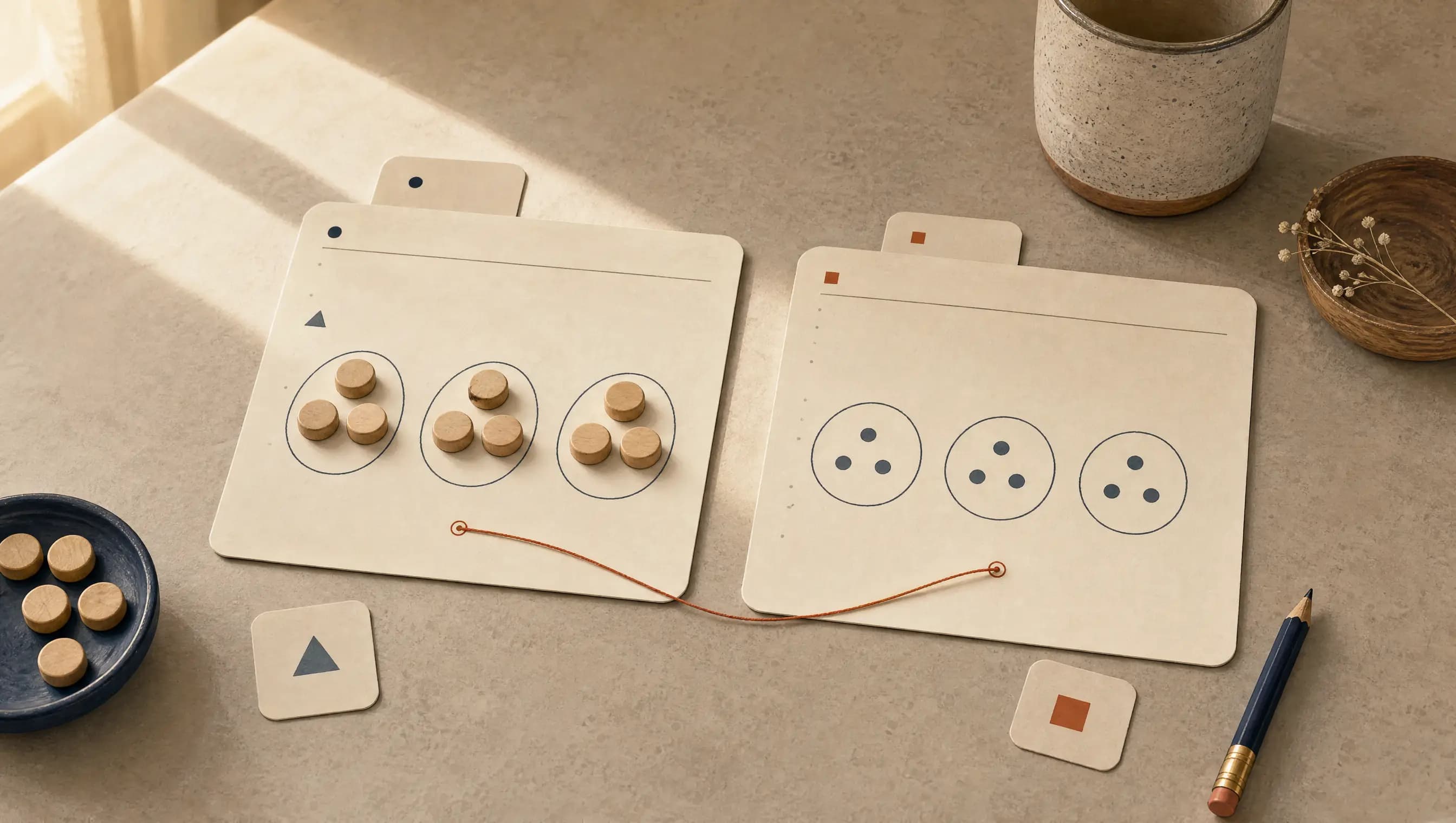
The old math page shows four bags of three buttons built with blocks. The new page shows five circles with four marks and 5 x 4 = 20. The pages look different. Did the learner use the same idea differently, or did only the paper change?
The useful comparison begins before the pages go into the folder.
A small way to document homeschool math progress is to compare two attempts at the same math idea using different problems. Each sample can keep the problem with the work, plus the date and a short note about the method, explanation, and help used. The later attempt may show less help, a clearer drawing, a better check, or a fuller explanation. Two unrelated worksheets cannot show that change simply because both say math at the top.
The mathematical idea matters more than the chapter number
By itself, “Finished lesson 27” records a place in the curriculum. It does not show what the learner did with the math.
Plain language can identify the idea:
- trading one ten for ten ones when subtracting
- seeing multiplication as equal groups
- comparing fractions with the same denominator
- choosing a unit before measuring
- explaining why two shapes have the same area
- using a table to find a pattern
Your note does not need formal vocabulary. It only needs enough detail to find the same math idea again.
The problem belongs with the work
An answer without its question is hard to interpret. The smallest useful sample can be a dated page or photo that keeps the problem with the work.
A few short notes can add context when they matter:
Date:
Math idea:
Model or method used:
What the learner explained:
Help or prompt used:
The written answer is one part of the sample. Blocks, drawings, number lines, gestures, and spoken explanations may show how the learner thought about the idea.
If the explanation was spoken, one short sentence can preserve it accurately. The learner's own language matters more than a polished rewrite.
A new problem can reveal the same idea again
Using the exact worksheet twice may show memory of the page. Using a completely different topic shows something else. A useful later problem is different enough that the page is not familiar, but similar enough to call for the same math idea.
For example:
August 4
Idea: equal groups
Problem: 4 bags with 3 buttons in each
Model: built four groups with buttons
Explanation: “I counted three, three, three, three.”
Help: parent asked how many bags and how many in each

September 1
Idea: equal groups
Problem: 5 plates with 4 crackers on each
Model: drew five circles and four marks in each
Explanation: “Five groups of four is twenty, so it is 5 x 4.”
Help: parent asked them to show it before writing the equation
The numbers and objects changed. The equal-groups idea stayed the same.
Correct answers are only one kind of evidence
A correct answer can come from a useful idea, a guess, a remembered pattern, or help that the page does not show. An incorrect answer can still contain a drawing or method that makes sense, plus one calculation error.
Useful changes include:
- choosing a model without being offered one
- explaining why the model matches the problem
- checking an answer in a second way
- noticing that an answer cannot fit the story
- using the idea in a less familiar example
- needing a smaller or different prompt
The record can state what happened and stop there. A later attempt can add another piece of the picture.
Visible help makes the comparison fair
Support is not noise in the record. It explains the work.
These notes describe different math moments:
- “Used the number line after I placed the first jump.”
- “Chose the number line after I asked how the distance could be shown.”
- “Drew the number line without a prompt and checked the subtraction.”
All three can be useful. Leaving the prompt out makes the samples look more alike than they were.
You do not need to list every object on the table. A note can name the one support that changed the work: a calculator, multiplication chart, set of blocks, worked example, or directions read aloud.
A surprising result can become a question
Sometimes the later sample looks less certain. The numbers may be larger, the wording unfamiliar, the day noisy, or the model poorly matched to the problem.
The pair does not have to tell a progress story it cannot support. A note about the difference can point toward another comparable moment:
This problem used the same operation but hid it inside a longer story. A shorter new story could show the same operation more plainly.
An honest record can say “not enough information yet.” That is more useful than a confident label built from mismatched pages.
The pair can shape one next step
The comparison earns its place when it helps the next lesson become more specific.
The pair may suggest one small next step:
- place the groups and equation side by side
- ask for a labeled drawing beside the equation
- practice the calculation without reteaching the equal-groups idea
One next step beside the pair turns the record into a useful planning note instead of a label on old work.
The homeschool progress report examples show how the same evidence can fit a broader report.
How Homa organizes the answers you share
If you want those details reflected in a broader family report, you can include what you saw in the answers you share with Homa. The Homa homeschool progress tracker groups your answers by subject and suggests a next step for an area you choose.
The report uses only the answers you share. You decide what the samples mean and what to try next.
Two samples can show one honest change
The two pages from the beginning can now tell an honest story. The problems changed from bags and buttons to plates and crackers, but both asked for equal groups. Each page kept the problem, the way the idea was shown, the learner's explanation, and the help used.
The change may be a correct answer, but it may also be a clearer drawing, a better check, or one less prompt. Those details can make the next lesson easier to choose.