How to track homeschool reading progress in ordinary lessons
One reading behavior across two comparable moments can show what changed and help you choose a useful next lesson.
By Homa
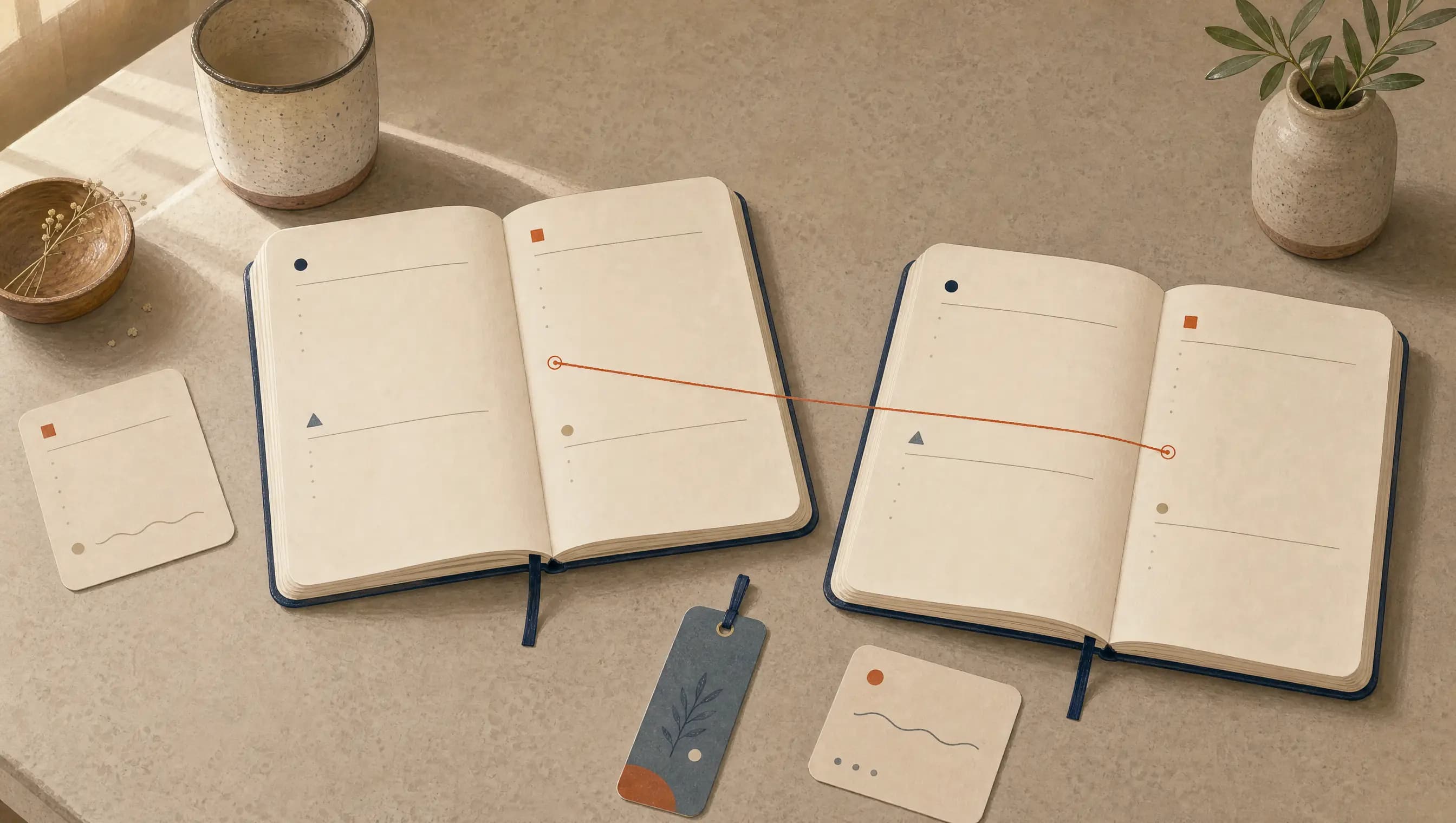
The book list is growing. The library bag is never empty. Still, the question arrives late at night: is reading actually becoming easier?
A list can show that books passed through the house. Two ordinary reading moments that are similar enough to compare can make progress easier to see.
A small way to track homeschool reading progress is to choose one reading behavior and keep two dated notes from similar reading moments. Each note can include what the reader did and any help you gave. One honest change may be less prompting, a useful reread, clearer attention to punctuation, or an explanation tied more closely to the page.
One reading behavior makes the question answerable
“Reading progress” is too large to fit inside one note. One thing you genuinely want to know makes a better question.
You might watch for whether the reader:
- notices when a sentence stops making sense
- tries an unfamiliar word again when the first attempt does not fit the sentence
- follows a change in speaker
- reads a familiar word pattern with less prompting
- retells the important event in order
- returns to the text to answer a question
- reads punctuation in a way that helps the sentence make sense
This is not a ladder or a daily checklist. The useful behavior is the one that matters for the lesson in front of you.
The two moments need a similar reading job
A familiar picture book and an unfamiliar chapter ask the reader to do different work. If the second reading sounds slower, the difference may belong to the text rather than the reader.
A compact note preserves enough context to recognize the comparison:
Date:
Text: title or short description
Reading behavior I watched:
What happened:
Help or tools used:
The later passage does not need to be identical. It only needs to ask for the same kind of reading, such as following unfamiliar dialogue, reading a short informational paragraph, or trying words built from the same pattern.
The match can stay ordinary. A much harder text may show what the new text demands, not what changed in the reader.
The help belongs beside the result
The same reading can mean something different depending on the help available.
You may read the first sentence, alternate pages, point to part of a word, ask for a reread, or simply wait. A bookmark under the line or an audiobook beside the print copy may help the reader stay with the text. The note only needs the help that mattered in that moment.
A few words about the help make the later change easier to understand:
August 4
Text: unfamiliar page with three speakers
Watched: following speaker changes
What happened: paused at each new speaker and reread two lines
Help: I marked the first speaker change; the reader marked the next two
Later, the same behavior may appear with a different amount or kind of help:
September 1
Text: unfamiliar page with three speakers
Watched: following speaker changes
What happened: changed voice at each speaker and reread one line after it sounded wrong
Help: no marks; I asked what made the line sound surprising
The useful change is visible because the notes include what you did.
Small changes can appear in the details
Progress can appear in several forms:
- Less help: the reader uses a strategy without the original reminder.
- It happens again: something that appeared once now appears across several moments.
- Notices and tries again: the reader catches a confusing sentence and does something useful.
- A clearer explanation: the reader connects an answer to a detail in the text.
- It shows up in a new book: the same behavior appears in a less familiar text.
Any one of these can point toward a next lesson. The notes can show the change without reducing the reading moment to a number.
A harder day does not erase an earlier change. Sleep, interest, a difficult text, or a noisy room can alter one reading moment. The note can wait beside the others until a pattern becomes clear.
The comparison can shape one next lesson
The record becomes useful when it changes what you do.
The comparison may suggest one of these small moves:
- a slightly longer dialogue scene after speaker changes become easier
- a short passage with several words that share the same ending
- one question that asks for a clue from the page
One written next step can keep the decision small:
Next: another short dialogue page where the reader marks the speaker changes.
The next step can be small enough to try once and specific enough to compare with the next note.
A reading log and a progress note can keep separate jobs
A homeschool reading log can preserve titles, authors, formats, and family memories. A progress note observes one reading behavior in context.
The same notebook can hold both, but the jobs remain different. Finishing several books does not prove that a particular reading behavior changed. One slow, thoughtful reading can still show a meaningful change.
Not every title needs a progress note. Occasional comparable notes are easier to keep and more useful to review.
A progress note can sit beside required records
A program or local requirement may ask for a particular report, work sample, or other record. This observation method does not replace those current instructions.
You can keep that required record separate from the family note. If the instructions are unclear, the contact listed on them can explain what belongs in the required record.
How Homa uses your observations
If you want several observations organized into a homeschool progress report for your own planning, the Homa homeschool progress tracker builds the report from the answers you share. It groups those answers by subject, begins with strengths, and suggests one next step for an area you choose.
Homa does not independently listen to the reading moment. The report organizes what you tell Homa, and you decide what to try next.
Two moments can answer a useful question
You can notice reading change inside ordinary lessons. One behavior, the text and support around it, and a later comparable moment can answer a useful question.
The result may be a quieter kind of evidence: one less prompt, one useful reread, one explanation tied back to the page. That can be enough to choose one small thing worth trying in tomorrow's lesson.