How to adapt a worksheet without changing the lesson
The lesson can stay the same when the number of problems, spacing, directions, visible items, or way of answering changes.
By Homa
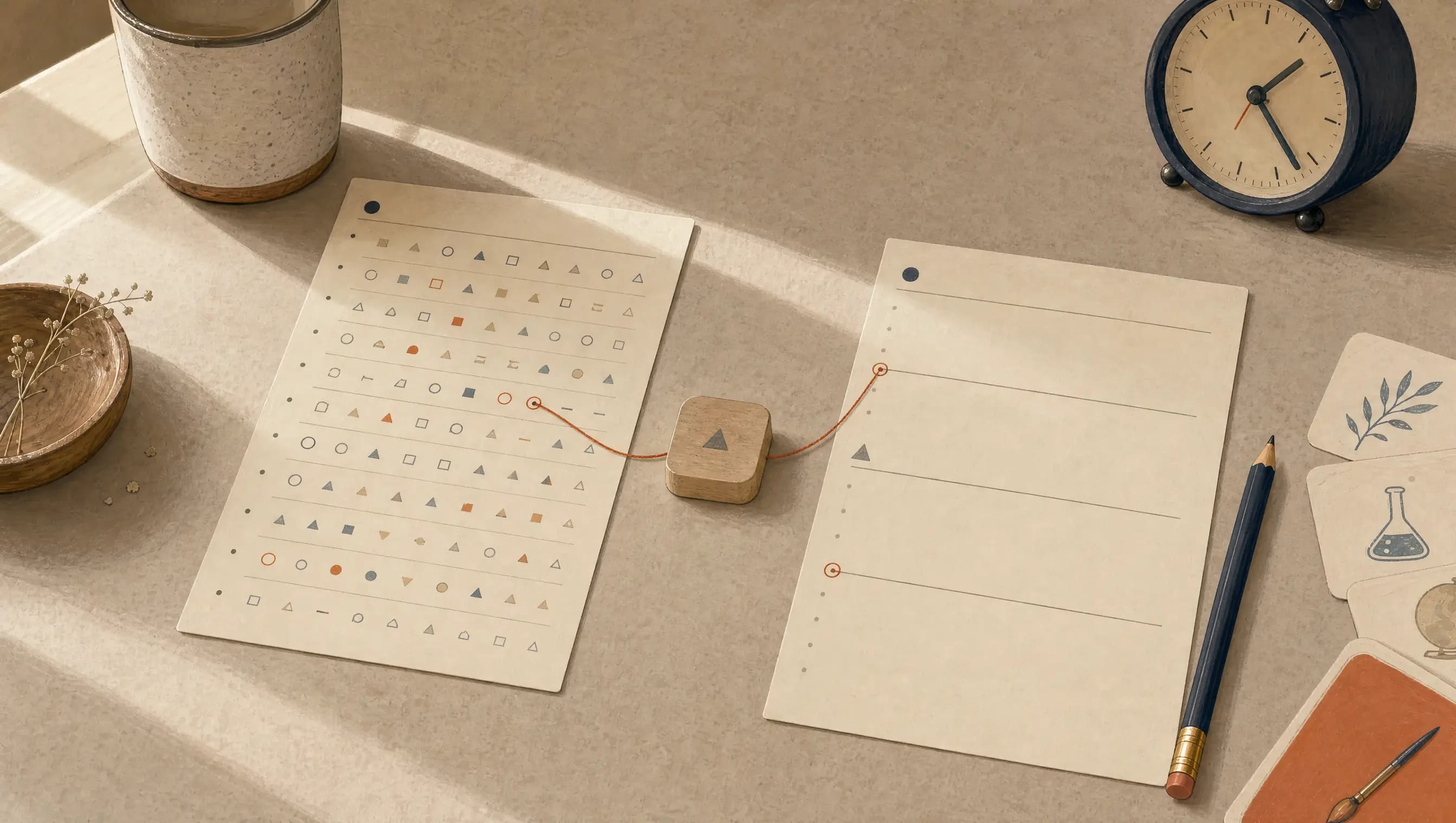
The worksheet practices the right idea. It also has twenty items, tiny spaces, three directions in one paragraph, and a maze in the corner that appears to have developed its own curriculum.
You may not need a different lesson. You may need a different way into the same lesson.
A worksheet can become easier to use while the lesson stays the same. The number of problems, how many items appear at once, the spacing, the directions, or the way a child answers may change. The learning target, the one idea the page asks the child to show, stays fixed. If the child can still show that idea after the edit, the lesson is still the same.
One sentence protects the learning target
Call this the learning target: the one idea the page asks the child to show. A sentence before the edit can name what must remain:
This page asks for __________________________________________.
Examples:
- compare fractions with the same denominator
- identify the speaker after a line of dialogue
- use capital letters at the beginning of sentences
- match an animal to the structure it uses for protection
The target names the idea rather than the worksheet action. “Circle six answers” describes the format. “Identify the speaker” describes the learning.
A useful adaptation keeps that sentence true unless you intentionally choose a different lesson.
Fewer items can preserve the same pattern
Fewer items can make a page easier to begin and leave more room for each response. The target can stay the same when the remaining items still ask for the idea more than once.
A small set can preserve the mix of problem types better than random crossed-out rows:
- one problem completed together
- two similar attempts
- one attempt with a useful variation
If the original page includes several problem types, whether they all belong today depends on the learning target. A shorter page that removes the only problem without a picture may no longer ask the same question.
You can keep a second set for later. The first page does not need to carry the entire week's practice.
Showing fewer items can make the page easier to enter
A full page can ask for attention before the first problem even begins.
Useful options include:
- covering the lower half with blank paper
- cutting the page into sections
- placing one section on each page
- adding a clear “start here” mark
- using boxes or spacing to separate items
The items remain. The child meets them in smaller groups.
This edit can help when the page looks crowded before the first problem begins. It also lets you see whether the child begins, skips around, or asks to uncover the next set.
More space can preserve the same answer
Larger type and answer areas, one item per line, a blank box for a drawing, and decoration placed away from directions can make the response easier to find. The answer line belongs beside its question.
A multi-step calculation needs space for its steps. A sentence needs room for the handwriting size the child actually uses.
More space leaves the mathematical or reading idea unchanged. It gives the child room to show that idea.
Clearer directions can preserve the lesson
Directions can be made easier to follow by separating actions:
1. Read the sentence.
2. Underline the speaker's words.
3. Write the speaker's name.
A completed example, a bold action word, or directions read together may make the sequence clearer.
The target decides whether simpler language preserves the lesson. If interpreting written directions is part of the lesson, reading them aloud changes what the task asks. If the lesson is about fractions, reading the directions aloud may leave the fraction target untouched.
The same support can be appropriate in one lesson and a target change in another.
Another way to answer may preserve the idea
A child may show the same idea by pointing, speaking, building, matching, drawing, typing, or choosing an answer before writing it by hand.
Changing how the answer is given can help when handwriting, copying, or finding the right place on the page is not the skill you are trying to see.
For example, a child can build four equal groups with counters and explain the groups aloud before writing the multiplication expression. The groups the child builds and the explanation they give show the mathematical idea, while writing stays a separate step.
The lesson decides whether this change keeps the same target. If the lesson is handwriting, a spoken response changes the lesson. If the lesson is identifying the main event in a story, a spoken response may preserve it.
A one-change note is easier to compare tomorrow
If the morning needs immediate relief, changing several parts of the page may be the right choice. The page may become more usable even if you do not know which edit mattered.
When you want to learn what may help again tomorrow, one change and a short note can make the result easier to understand:
Change: showed four items at a time
What happened: began without a reminder and asked to uncover the next set
Next: keep the same item groups on tomorrow's page
The note records what changed on the page and what happened next. It does not turn one useful format into a permanent label.
Sometimes the honest choice is a different lesson
Sometimes changing the target is the honest decision.
After a fraction-comparison page, you may choose a new lesson on building equal parts. After a written-summary attempt, you may choose to talk through the sequence before drafting again. That is not a failed adaptation. It is a planning decision.
The record can name that decision plainly:
Original target: compare fractions with the same denominator
New lesson: build and name equal parts
Keeping the distinction clear makes later progress easier to interpret.
If you choose a new lesson, the one-skill practice-page brief keeps the idea, amount, and answer format together before the page is rebuilt.
How Homa makes a requested change
Instead of reformatting the old page, the Homa personalized practice-page feature can make a new one from the lesson you name. You can request larger numbers, a familiar interest, or another page detail, then print the generated page from the digital binder.
A request can include both the learning target and the page change you want. You decide whether the revised page still asks for the intended idea.
The lesson can stay while the page changes
The learning target names the one idea the page asks for. The amount, visibility, space, directions, or way of answering can change around it. After the edit, one question remains: could the child still show the original idea?
If yes, the lesson stayed while the page changed. If no, the record can name the new lesson plainly. Tomorrow's smallest useful move may be one sentence at the top of the page: “This page asks for...”