What to do when a homeschool lesson runs long
A simple stopping rule can end a long homeschool lesson clearly and protect the rest of the day.
By Homa
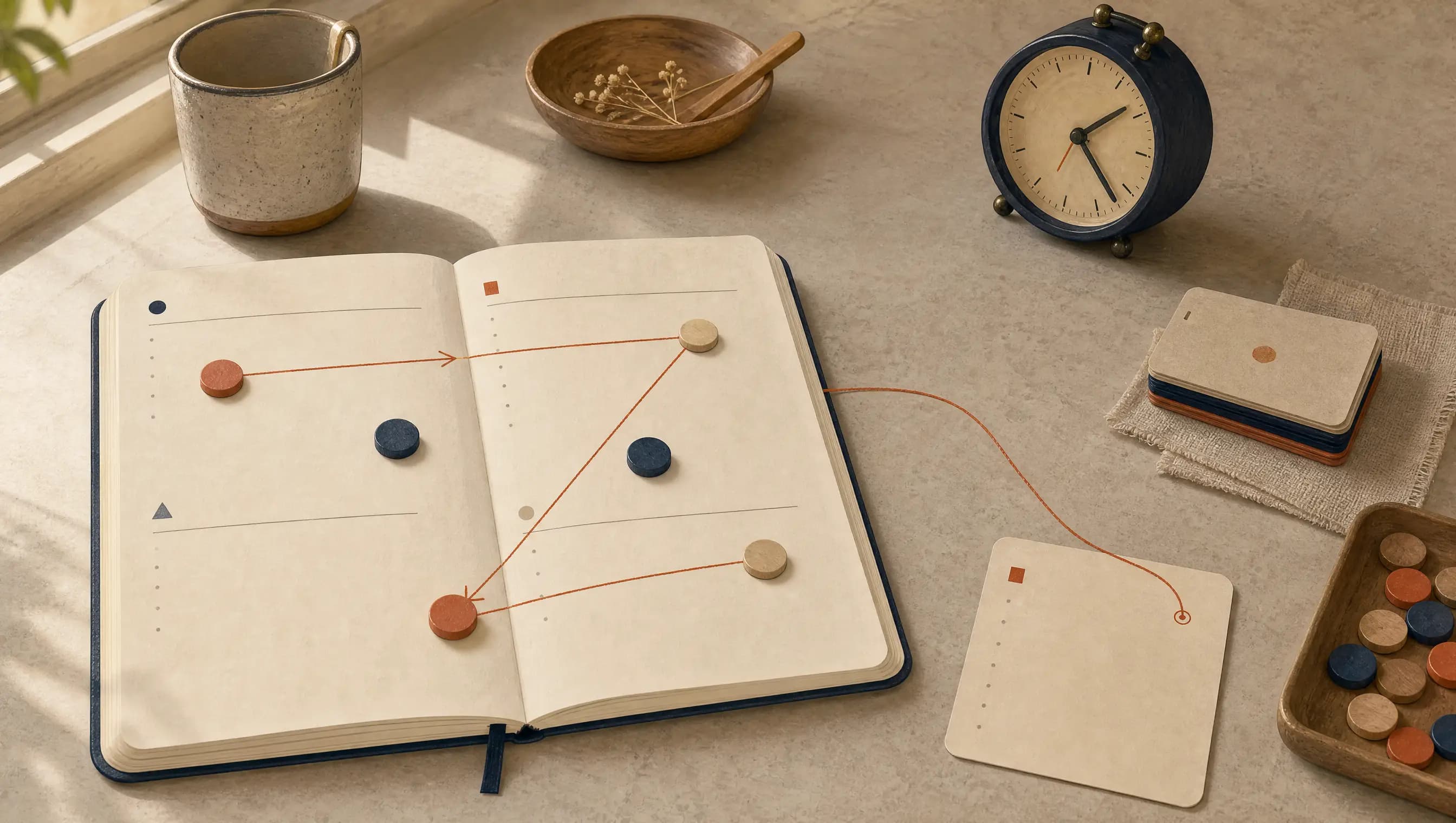
The math lesson was supposed to take thirty minutes. An hour later, the paper is crowded with blocks and arrows, lunch is late, and history is waiting with the patience of a cat outside a closed door.
The clock says the lesson ran long. It does not say whether the extra time was useful.
When a homeschool lesson runs long, the last ten minutes can show what happens next. If something new is clicking, one visible finish line can keep the useful thinking going. If the same problem keeps returning or the page is simply too long, a restart note can preserve the next step for tomorrow. One decision about the remaining work protects the rest of today.
Why the lesson is still going changes the answer
The same extra twenty minutes can mean three different things.
Something new is clicking. A child finds a useful way to see the problem, asks another question, or tests the idea once more. The lesson is long because the thinking is still changing.
The work is circling. The same prompt leads to the same stuck point. More minutes may add frustration without revealing a new way forward.
The page is longer than the lesson needs. The first few problems already show what the child can do, but twelve more remain because the worksheet has twelve more rows.
Naming the reason matters because each one needs a different response. A timer alone treats curiosity, confusion, and excess practice as the same problem.
Three questions can show when to stop
When the planned time ends, three questions can separate useful new thinking from repetition:
- What changed in the last ten minutes?
- Would one more attempt tell us something new?
- What would make this easier to restart later?
If the last ten minutes produced a new explanation or a more independent attempt, another short stretch may be worthwhile.
If the same obstacle keeps returning, the next useful action may be a different example, a break, or a smaller starting idea tomorrow. Repeating the same prompt louder is not a new strategy.
If the child has shown the skill and the remaining items only repeat it, the page can stop before the ink runs out.
A visible finish line keeps five more minutes bounded
“Let's keep going” can quietly become another hour. A named reason and finish line make the extra time visible:
- “You found a new way to show the groups. Let's try one more problem with it.”
- “You want to see whether both seeds have roots. Let's finish this observation, then eat.”
- “The paragraph is almost saying what you mean. Let's choose the last sentence, then stop.”
One more attempt is a decision. “Until this feels done” has no visible end.
A restart note makes tomorrow easier
Stopping can make tomorrow harder when the whole lesson has to be rediscovered. A restart note preserves the exact next step:
We were working on: trading one ten for ten ones
What made sense: building 42 with four tens and two ones
Where we paused: 42 minus 7
Start tomorrow with: build 42 again, then remove 2 and trade one ten
The note is not a report on the child. It records where the work paused and what can happen next.
A book flag, a photo of the blocks, or one sentence in the planner can do the same job. Tomorrow can begin with the saved next step instead of reconstructing yesterday's work.
One decision protects the rest of the day
Once one lesson runs long, the original plan no longer fits the remaining hours. Completing it unchanged takes time from lunch, movement, another child's attention, or the parent who still has a whole day to live.
The remaining work can go in one of three places:
| Choice | Use it when |
|---|---|
| Keep it today | The work is brief, time-sensitive, or needed for another commitment |
| Move it | The work matters and has a real place later in the week |
| Let it go | The work was extra, repeated elsewhere, or no longer earns the time |
Moving every unfinished item turns Tuesday's long lesson into Friday's impossible pile. A real destination keeps “move it” from meaning “feel bad about it later.”
The same keep, move, or let-go decision can make the whole weekly schedule more flexible.
One useful note can improve the next plan
The lesson can add one note to the next plan:
- The assigned amount was too large.
- The concrete example helped.
- Reading the directions together helped.
- The child wanted more time because the question became interesting.
- The next attempt could start with a smaller example.
That note makes the next plan more realistic. “Math took sixty-five minutes” is less useful than “the idea opened after we built it with blocks, then one written problem was enough.”
How Homa helps with the changed week
The Homa homeschool planner can revise the remaining weekly plan after a day changes. You choose which work to keep and move.
Homa cannot decide whether the current lesson should continue. You can see the conversation, the effort, and whether the last attempt changed anything.
A clear ending leaves a way back in
A lesson can end with either a reason for five more minutes or an exact place to restart tomorrow.